
Every digital wellness conversation I’ve walked into started with students. Students are distracted. Students are always on their phones. Students can’t focus. Those concerns are usually fair. They’re also why most of these initiatives go nowhere.
We stay up later than we meant to. We feel the pull to answer a message the second it arrives. We lose an evening we never planned to lose. Asking students to build a healthier relationship with technology while ours goes unexamined is the fastest way to lose them, and they notice long before anyone says it out loud.
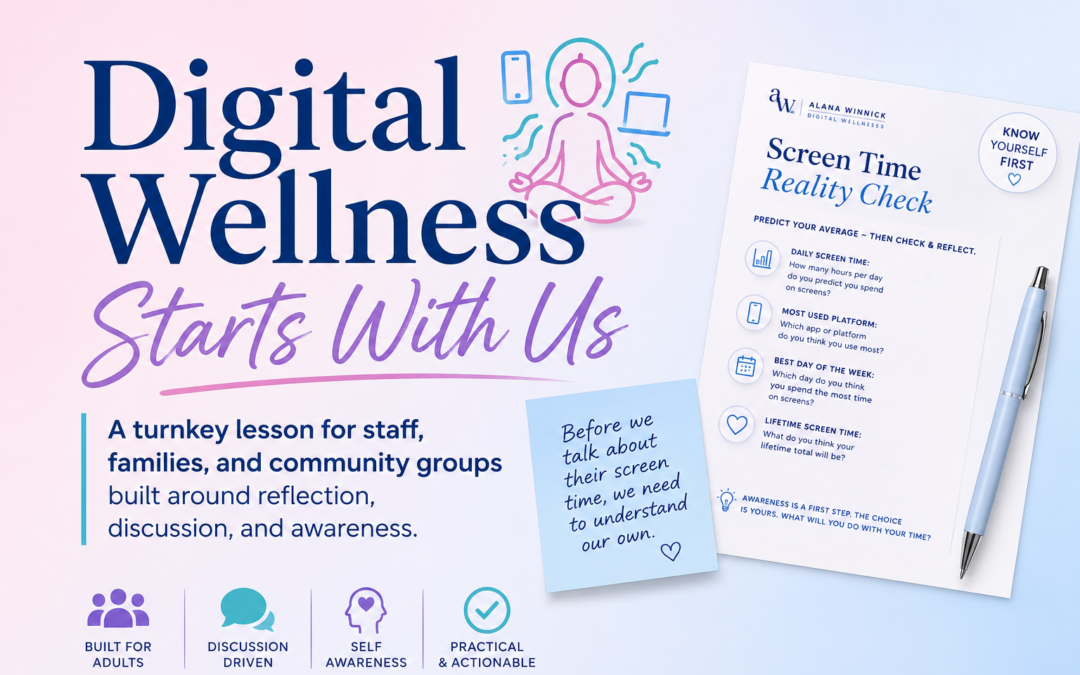
So this session starts with the adults in the room. Participants predict their own screen time, compare the guess to the real number, see what those hours add up to over a lifetime, and sit with four questions: What is technology adding? What is it replacing or displacing? How does it make me feel? Is it serving its purpose?
When we ran this in my district, it was the turning point. Our Digital Wellness Committee had staff look at data on their own phone use first. Many of them did not like what they saw. We did the same exercise with students and families afterward, and every conversation was different from that point on, because nobody was being lectured by an adult who had not looked at their own number.
What’s included:
- A turnkey slide deck
- Printable worksheets
- Discussion prompts
- Digital wellness strategies to send people home with
Built for a faculty meeting, a parent workshop, a leadership retreat, or a community conversation. You don’t need to be the expert on this. You just have to be willing to go first.
Enter your email and I’ll send you the toolkit.